

(2025) C-C4H56-2411 Dumps and Practice Test (82 Questions)
Guide (New 2025) Actual SAP C-C4H56-2411 Exam Questions
SAP C-C4H56-2411 Exam Syllabus Topics:
| Topic | Details |
|---|---|
| Topic 1 |
|
| Topic 2 |
|
| Topic 3 |
|
| Topic 4 |
|
| Topic 5 |
|
| Topic 6 |
|
| Topic 7 |
|
| Topic 8 |
|
NEW QUESTION # 17
What are the prerequisites for integrating external systems into the Agent Desktop? Note: There are 2 correct answers to this question.
- A. SAP Event Mesh
- B. SAP Build Apps
- C. SAP Cloud Integration
- D. SAP Business AI
Answer: A,C
Explanation:
To integrate external systems into the Agent Desktop in SAP Service Cloud V2, SAP Cloud Integration (part of SAP BTP) is required to facilitate data exchange and API connectivity between systems. Additionally, SAP Event Mesh is used for event-driven integrations, enabling real-time updates from external systems. According to SAP documentation, "SAP Cloud Integration and SAP Event Mesh are prerequisites for integrating external systems into the Agent Desktop to ensure seamless connectivity." SAP Build Apps (A) is for app development, not system integration. SAP Business AI (D) enhances functionality but is not a prerequisite for integration.
Reference:
SAP Help Portal: External System Integration in SAP Service Cloud V2
SAP Community: Integration with SAP BTP
NEW QUESTION # 18
Which of the following account master data can be included when creating account master data objects? Note: There are 2 correct answers to this question.
- A. Contract data
- B. Account team member
- C. Title
- D. Role
Answer: B,D
Explanation:
When creating account master data objects in SAP Service Cloud V2, Role can be included to define the account's function (e.g., customer, prospect). Account team member is also included to assign employees responsible for managing the account. According to SAP documentation, "Account master data includes attributes such as Role and Account Team Members to support customer relationship management." Title (B) is typically associated with contacts, not accounts. Contract data (D) is managed separately and not part of account master data creation.
Reference:
SAP Help Portal: Account Master Data in SAP Service Cloud V2
SAP Learning: Account Management Configuration
NEW QUESTION # 19
When using autoflow rules, which of the following do you need to consider? Note: There are 3 correct answers to this question.
- A. Optimization from the back end is done automatically when too many autoflow rules exist.
- B. Conditions can be based on standard fields.
- C. Too many rules affect system performance.
- D. Conditions can be based on extension fields.
- E. Autoflow rules must be assigned to the business role.
Answer: B,C,D
Explanation:
When using autoflow rules in SAP Service Cloud V2, administrators must consider that conditions can be based on standard fields (e.g., case type, priority) to trigger automated actions. Too many rules can affect system performance, as excessive rules increase processing time. Additionally, conditions can be based on extension fields, allowing customization to meet specific business needs. According to SAP documentation, "Autoflow rules support conditions based on standard and extension fields, but administrators should monitor rule volume to avoid performance issues." Optimization from the back end (C) is not automatic for autoflow rules. Assigning autoflow rules to business roles (E) is not required, as rules are system-wide.
Reference:
SAP Help Portal: Autoflow Configuration in SAP Service Cloud V2
SAP Community: Best Practices for Autoflow Rules
NEW QUESTION # 20
You have configured the Service Level Agreements and their determination rules, but they are not derived in the case. Which of the following could be a reason for this? Note: There are 2 correct answers to this question.
- A. Service Level Agreements are not configured in fine-tuning.
- B. Service Level Agreements are not activated as a service.
- C. The determination rules have been configured, but not activated.
- D. A workflow rule was not scheduled to trigger the determination.
Answer: B,C
NEW QUESTION # 21
What can you do with Microsoft Teams integration? Note: There are 3 correct answers to this question.
- A. Send e-mails to customers.
- B. Share workspaces.
- C. Hand over cases.
- D. Create appointments.
- E. Make outbound calls.
Answer: B,D,E
NEW QUESTION # 22
Which milestone can you use for service levels?
- A. Initial review date
- B. Created-on date
- C. Warranty validity
- D. Status
Answer: B
NEW QUESTION # 23
Which of the following parameters can be maintained by the administrator when configuring a new email channel? Note: There are 3 correct answers to this question.
- A. Reply to default
- B. Channel email ID
- C. Case type
- D. Mashup service
- E. Channel type
Answer: A,C,E
NEW QUESTION # 24
Which capability ensures service agents send e-mail responses with the correct corporate branding?
- A. E-mail templates
- B. Determination rules
- C. Workflow rules
- D. Autoflow
Answer: A
NEW QUESTION # 25
What information can be maintained in the Related Objects facet of a case? Note: There are 3 correct answers to this question.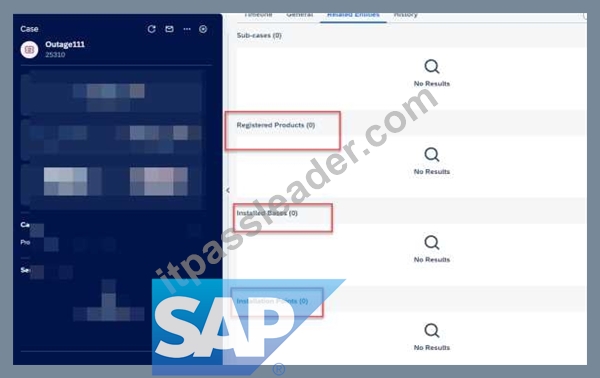
- A. Installation points
- B. Products
- C. Registered products
- D. Registered products and installed bases related to the account only
- E. Installed bases
Answer: A,C,E
NEW QUESTION # 26
Which types of master data can be used in case routing? Note: There are 2 correct answers to this question.
- A. Account hierarchy
- B. Service Team
- C. Contact
- D. Responsible employee
Answer: B,D
Explanation:
In SAP Service Cloud V2, case routing can utilize master data such as Responsible employee to assign cases to specific individuals based on conditions like expertise or availability. Service Team is also used to route cases to predefined teams. According to SAP documentation, "Case routing rules can leverage master data like Responsible Employee and Service Team to determine case assignments." Contact (B) is a case attribute but not typically used for routing. Account hierarchy (C) is used for account management, not routing.
Reference:
SAP Help Portal: Case Routing Configuration in SAP Service Cloud V2
SAP Learning: Master Data in Case Routing
NEW QUESTION # 27
Where are employee working hours maintained?
- A. Employee data
- B. Business role
- C. Business user data
- D. Holiday calendar
Answer: A
Explanation:
Employee working hours in SAP Service Cloud V2 are maintained in the Employee data. This includes details such as working hours, time zones, and availability, which are used for scheduling and case routing. According to SAP documentation, "Under the Operating Hours, you can define the working hours of the service agent" within the employee data settings.
Holiday calendar (A) defines non-working days, not individual hours. Business role (B) manages access rights, not working hours. Business user data (D) includes user credentials but not working hour details.
Reference:
SAP Community: Service Level Agreement in SAP Cloud for Customer community.sap.com SAP Help Portal: Employee Data Configuration
NEW QUESTION # 28
Which of the following configuration activities are part of SAP Service Cloud Version 2? Note: There are 2 correct answers to this question.
- A. Set up deals
- B. Set up Agent Desktop
- C. Set scoping attributes
- D. Maintain case types
Answer: B,D
NEW QUESTION # 29
What options are available to automatically assign an employee or team to a case? Note: There are 2 correct answers to this question.
- A. Set up rules with BRF+.
- B. Set up rule(s) for case routing to teams.
- C. Define case types and assign responsible teams and employees.
- D. Set up rule(s) for case routing to employees.
Answer: B,D
NEW QUESTION # 30
Which of the following services can be activated in SAP Service Cloud Version 2? Note: There are 2 correct answers to this question.
- A. Maintenance plans
- B. Live activity configuration
- C. Templates
- D. Agent Desktop
Answer: B,D
Explanation:
In SAP Service Cloud V2, Live activity configuration can be activated to enable real-time interaction features like phone or chat channels. The Agent Desktop is also a service that can be activated to provide agents with a centralized interface for case management. According to SAP documentation, "Services such as Live Activity Configuration and Agent Desktop can be activated to enhance service delivery in SAP Service Cloud V2." Maintenance plans (A) are managed in SAP S/4HANA, not Service Cloud V2. Templates (B) are configured but not activated as a service.
Reference:
SAP Help Portal: Service Activation in SAP Service Cloud V2
SAP Learning: Agent Desktop and Live Activity Setup
NEW QUESTION # 31
What do you need to configure to access cases in SAP Service Cloud Version 2?
- A. Assign access rights directly to the user.
- B. Assign the business service case to a business role.
- C. Create access rights for read mode.
- D. Assign the employee to a case type.
Answer: B
Explanation:
To access cases in SAP Service Cloud V2, the business service case must be assigned to a business role. Business roles define the permissions and access rights for users, including access to specific objects like cases. According to SAP documentation, "Assign the business service case to a business role" is a critical step to ensure users have the necessary permissions to view and manage cases.
Creating access rights for read mode (B) is not a standard configuration step for case access. Assigning the employee to a case type (C) is related to routing, not access. Assigning access rights directly to the user (D) is not supported, as access is managed through business roles.
Reference:
SAP Help Portal: Business Role Configuration in SAP Service Cloud V2
SAP Learning: Access Management in SAP Service Cloud
NEW QUESTION # 32
Which of the following parameters can be maintained by the administrator when configuring a new e-mail channel? Note: There are 3 correct answers to this question.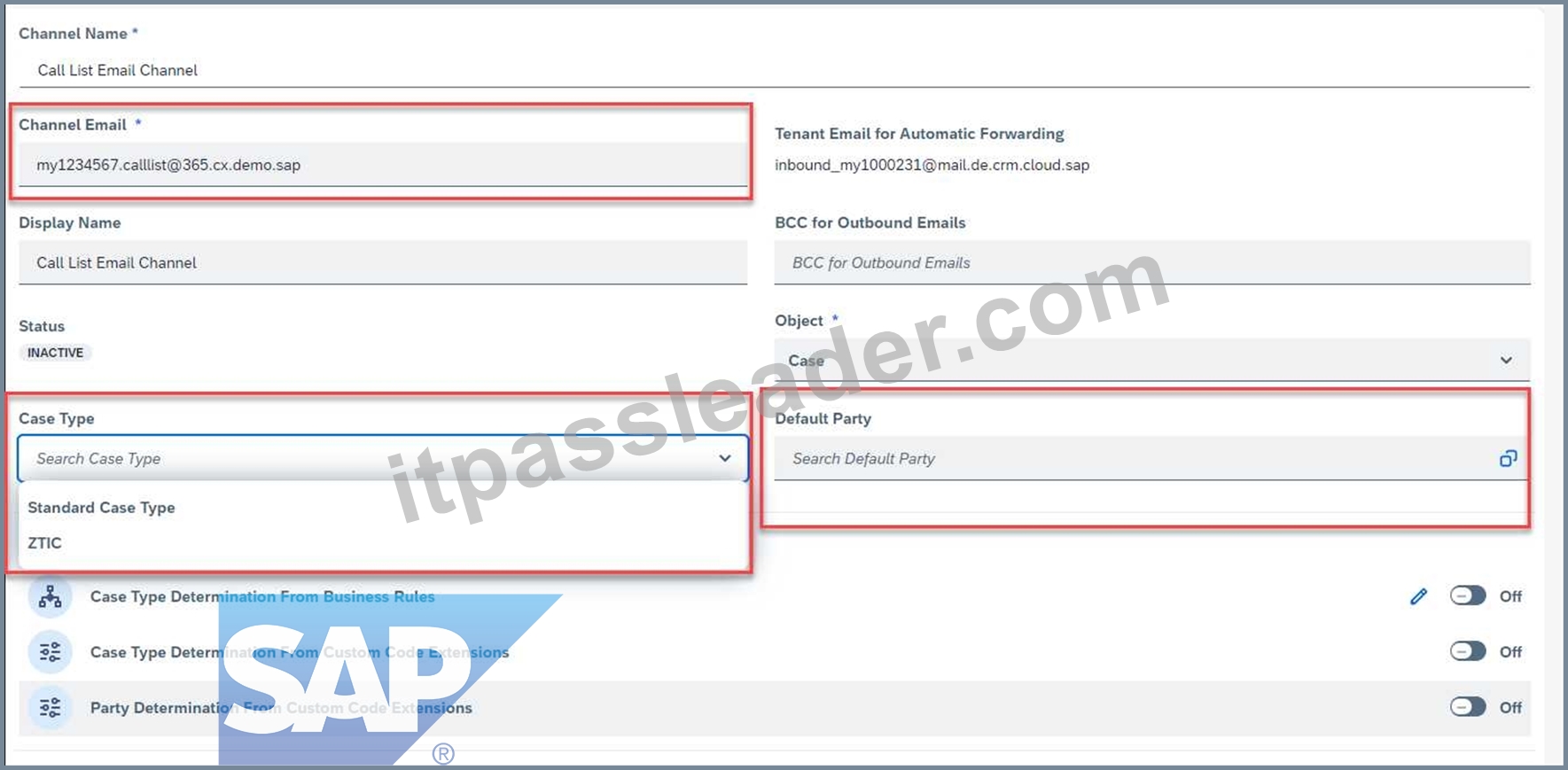
- A. Case type
- B. Mashup service
- C. Default account
- D. Channel type
- E. Channel e-mail ID
Answer: A,C,D
NEW QUESTION # 33
Which of the following objects can be displayed in the Timeline tabstrip in the Customer Hub? Note: There are 2 correct answers to this question.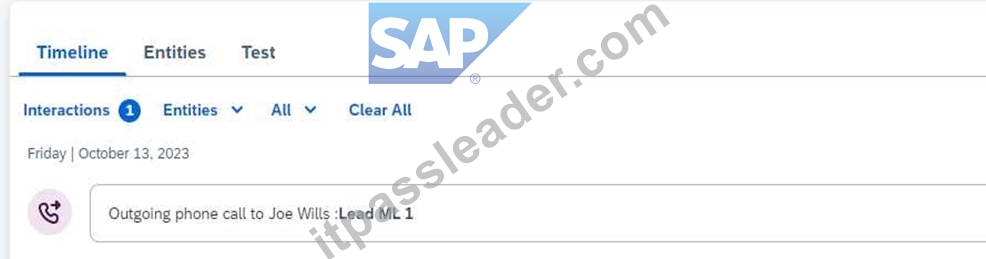
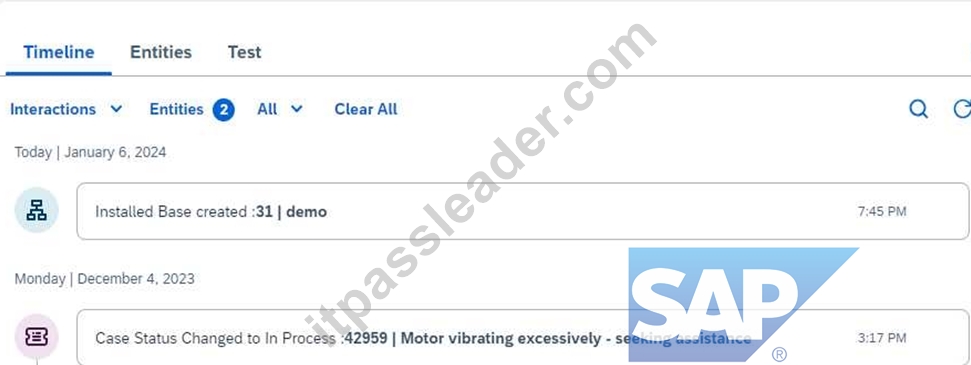
- A. Cases
- B. Contracts
- C. Calls
- D. Installed base
Answer: A,B
NEW QUESTION # 34
Which configuration can you use to trigger a warning message based on custom logic?
- A. Create an autoflow
- B. Create a validation
- C. Create a page layout
- D. Create a determination
Answer: B
NEW QUESTION # 35
You have integrated Microsoft Teams with SAP Service Cloud Version 2.
Where can service agents start sharing workspaces for cases by clicking on the Share Workspace icon? Note: There are 2 correct answers to this question.
- A. In Agent Desktop
- B. In the case worklist
- C. In the case
- D. In the interaction log
Answer: A,C
NEW QUESTION # 36
Which objects can you use to route a case to an employee?
- A. Source
- B. Input fields in the Case Designer
- C. Mashup
- D. Autoflow
Answer: A
Explanation:
In SAP Service Cloud V2, the Source of a case (e.g., email, phone, social media) can be used as a condition to route a case to an employee. According to SAP documentation, "You can configure the rules to determine the Service Level for a certain ticket depending on several parameters like Ticket Type, Service Category, Source, Channel ID etc." Source is a standard attribute in routing rules to determine the appropriate employee or team.
Mashup (A) is used for external integrations, not routing. Autoflow (B) automates actions but does not route cases to employees. Input fields in the Case Designer (C) collect data but are not used for routing.
Reference:
SAP Community: Service Level Agreement in SAP Cloud for Customer community.sap.com SAP Help Portal: Case Routing Rules Configuration
NEW QUESTION # 37
......
C-C4H56-2411 Exam Dumps Pass with Updated 2025 Certified Exam Questions: https://troytec.itpassleader.com/SAP/C-C4H56-2411-dumps-pass-exam.html